
Criminal Court Records in Baraga County
A criminal court record is a case file. Baraga County opens one once a prosecutor files a charge. Michigan Court Rule 1.109 defines court records broadly. It covers pleadings, orders, judgments, notices, warrants, and other documents filed with, or created by, the court. The clerk of court keeps that file open while the case is active. New material is added at nearly every stage. That makes a Baraga County criminal court record different from an arrest report or a jail booking log. Both exist before a case record is ever opened. A closer look at the charges themselves, including how charge status changes after arrest, lives on Baraga County's arrest records and court charges page.
Baraga County criminal court records are split between two trial courts. That split shapes how a search should begin. Misdemeanor charges are filed and resolved entirely in Baraga County District Court. Felony charges also start there. A defendant is arraigned on the complaint. The case then moves through a probable cause conference and, often, a preliminary examination. If the district court finds probable cause, the felony case is bound over to Baraga County Circuit Court. Circuit court handles the information, pretrial hearings, trial or plea, and sentencing. Juvenile delinquency matters follow a different path. Those cases are heard in the family division of circuit court.
How Baraga County Criminal Cases Proceed
Every Baraga County criminal case follows a set order. The pace can vary though. A misdemeanor may finish inside one courtroom. A felony almost always moves between two. Knowing where a case sits in that order is often the fastest way to understand what the record currently shows.
Case flow: Charges Filed › Arraignment › Probable Cause Conference / Preliminary Exam › Bindover › Circuit Arraignment / Pretrial › Plea or Trial › Disposition › Sentencing
Charges filed in district court trigger an arraignment. That is the hearing where a defendant hears the charge and enters an initial plea. Felony cases add two more district-court steps: a probable cause conference and, often, a preliminary examination. Both test whether enough evidence exists to move forward. Only if the district court finds probable cause does the case bind over to circuit court. Bindover simply means the case transfers to the felony-level proceedings that follow.
Once a felony case reaches circuit court, the defendant is arraigned again. This time it is on the information rather than the complaint. Pretrial hearings and motions follow. The case ends in a plea, a trial verdict, or a dismissal. Sentencing closes out the proceeding. Probation supervision or fine payments can keep the file active afterward. Misdemeanor cases skip the bindover step entirely. They move straight from arraignment through pretrial matters to disposition and sentencing inside Baraga County District Court.
Searching Baraga County Criminal Court Records
MiCOURT Case Search is the statewide portal used to look up Baraga County criminal court records online. It covers criminal, civil, traffic, domestic, and probate cases. What appears depends on the court and case status. Baraga County District Court has its own direct link inside the system. That is the 97th District Court service page, the fastest route to local criminal filings. Circuit-level felony records, once a case is bound over, are searched through that same statewide portal.
- Open MiCOURT Case Search or go directly to the Baraga County District Court service link.
- Search by the defendant's last and first name, or by case number if it is already known.
- Narrow results using the criminal case type category, case status, case year, or offense and disposition date ranges.
- Open the matching case to review the docket entries, charges, and any published disposition.
- Contact the district or circuit clerk for a certified copy or for detail the online search does not show.
Public searches work the same way for a misdemeanor or a felony. Results are limited by design though. Name searches only match names that begin with the letters entered. Public users are capped at a small number of results per search. Expanded charge history and hearing-by-hearing detail are reserved for authorized court users. A case missing from a public search has not necessarily disappeared. It may still be processing.
What Baraga County Criminal Records Show
Once a Baraga County criminal case record is open, it documents the file piece by piece. Michigan Court Rule 1.109 lists complaints, warrants, notices, plea entries, judgments, sentencing orders, and probation entries as part of the record the court keeps. Docket history ties it together in one chronological list. A case can look very different at the complaint stage than after sentencing. Reading a full record usually means checking several fields together.
| Field | What It Shows |
|---|---|
| Complaint | The document that states the charge and opens the case. |
| Warrant | An arrest or bench warrant tied to the case under MCR 1.109. |
| Arraignment | The hearing where the charge is read and an initial plea is entered. |
| Plea | The defendant's formal response to the charge, including any later change. |
| Motions | Requests filed by either side, such as motions to suppress or dismiss. |
| Judgment | The court's formal ruling on guilt, by plea, verdict, or dismissal. |
| Sentence | The penalty imposed, including jail time, fines, or probation. |
| Probation | Supervision entries logged when the sentence includes probation. |
| Docket history | The chronological list of every filing, hearing, and order. |
Note: Not every field is filled in every case, since a dismissed or pending charge will not yet show a judgment or sentence entry.
Reading Dispositions in Baraga County Criminal Cases
A disposition is the outcome of a criminal charge. Baraga County records use several common disposition terms. Guilty and not guilty describe the two ends of a trial or plea. Dismissed means the charge did not move forward. Nolle prosequi describes a prosecutor's decision to drop a charge before it is resolved. Some cases carry a deferred outcome tied to a court program instead of a standard conviction. A sentencing entry only follows a guilty disposition. It spells out the actual penalty, whether jail time, a fine, restitution, or probation.
- Arraignment
- The hearing where a defendant is told the charge and enters an initial plea.
- Bindover
- Moving a felony case from district court to circuit court after probable cause is found.
- Nolle Prosequi
- The prosecutor's decision to drop a charge before it is resolved.
- Disposition
- The final result of a charge, such as a conviction, dismissal, or acquittal.
- Probation
- Court-ordered supervision served instead of, or after, time in custody.
Reading a Baraga County criminal record correctly means separating charge language from disposition language. A charge is an accusation. A disposition is the court's decision.
Charges vs. Convictions in Baraga County
A criminal charge and a criminal conviction are not the same thing. Both can appear in the same Baraga County case file though. A charge is the accusation a prosecutor files after reviewing a police report. A conviction only happens after a guilty plea or verdict. Anyone reading a record who confuses the two risks treating a dismissed charge as though a person were found guilty.
| Charge | Conviction | |
|---|---|---|
| Stage | Accusation filed by the prosecutor | Verdict or guilty plea entered by the court |
| Court Document | Complaint or information | Judgment of guilt |
| Standard Met | Probable cause | Guilt beyond a reasonable doubt |
| Appears in Record | Yes, as filed | Yes, with disposition and sentence |
| Can Still Change | Amended, reduced, or dismissed before trial | Generally final unless appealed |
Michigan's district-to-circuit routing makes the gap between charge and conviction easy to see. A felony charge can sit in Baraga County District Court for weeks while probable cause is tested. That happens long before any circuit court conviction becomes possible.
Protected Identifiers in Baraga County Criminal Records
Michigan Court Rule 1.109 protects specific personal information inside court filings. Some data is off limits. Date of birth, Social Security number, driver's license or state ID number, passport number, and financial account numbers all count as protected identifiers. Filings with those identifiers generally must be redacted first. A clerk is not required to scrub every protected item from every document. The rule still requires redaction procedures for the copies the public sees.
MCR 8.119 sets the broader access framework. A record can be treated as nonpublic only when a statute or another court rule makes it so. Otherwise, public case records stay open to inspection. That standard ties Baraga County's district, circuit, and probate records together. Each court still handles a different slice of the criminal caseload.
Key Court Rules:
MCR 1.109 - Defines court records and requires protected identifiers such as date of birth and Social Security number to be redacted from public filings.
MCR 8.119 - Sets the public-access framework for court records, keeping case files public unless a statute or rule makes them nonpublic.
ICHAT vs. Baraga County Criminal Court Records
ICHAT, the Internet Criminal History Access Tool, is Michigan State Police's public criminal-history lookup. It searches records maintained by the Michigan State Police Criminal Justice Information Center. It draws from all 83 counties statewide, not just Baraga County. ICHAT reports felony convictions and serious misdemeanors punishable by more than 93 days in jail.
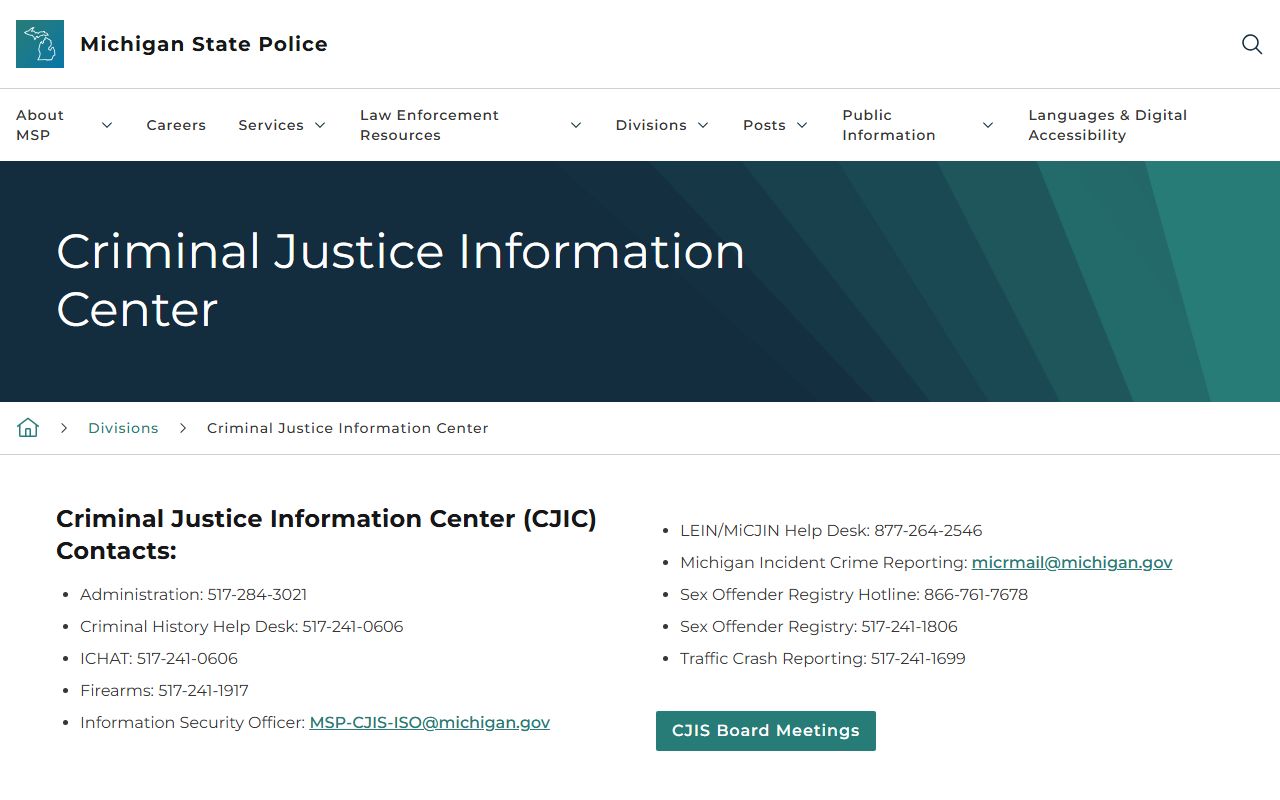
The Criminal Justice Information Center, shown on its official CJIC page, is the state division that feeds the ICHAT search. Many employers and landlords use it for a background check.
That statewide check is useful. It is not the same as a Baraga County court docket though. ICHAT does not show pending charges, warrant status, or suppressed records. It will not display the motions, plea, or sentencing detail that live inside the actual district or circuit court case file.
Sealed vs. Set Aside in Baraga County
Michigan does not use the word expunge the way some states do. Instead, an eligible conviction can be set aside. That is Michigan's version of clearing a record. It is sometimes automatic under the state's Clean Slate law. A sealed record works differently. Sealing keeps a filing out of public view. It does not erase the underlying case. It can apply to juvenile matters or documents a judge orders nonpublic under MCR 8.119.
The state's own memo on automatically set aside convictions explains that public MiCOURT search access changed during the Clean Slate rollout. Some older cases became temporarily harder to search while the transition was underway. That does not mean a set-aside case vanished. It means public search access to it narrowed.
| Sealed / Nonpublic | Set Aside | |
|---|---|---|
| What Happens | Record stays on file but is hidden from public search | Conviction is treated as cleared from the public record |
| Case Still Exists | Yes, restricted rather than destroyed | Yes, but public access is sharply limited |
| Who Can Still See It | Courts and authorized users | Law enforcement and limited authorized users |
| Typical Use | Juvenile cases, protected identifiers, judge-ordered nonpublic filings | Eligible adult convictions under Michigan's set-aside and Clean Slate process |
Restricted Baraga County Criminal Records
Some Baraga County criminal matters do not appear the same way an ordinary adult case does. Juvenile delinquency cases are heard in the family division of circuit court. Those files carry tighter confidentiality than adult district or circuit dockets. Court rules also keep certain filings nonpublic altogether when a statute or a judge's order calls for it. That is separate from the sealing and set-aside rules covered above.
A related but separate state system is the Michigan Sex Offender Registry. It tracks registration and compliance status rather than case-file detail.
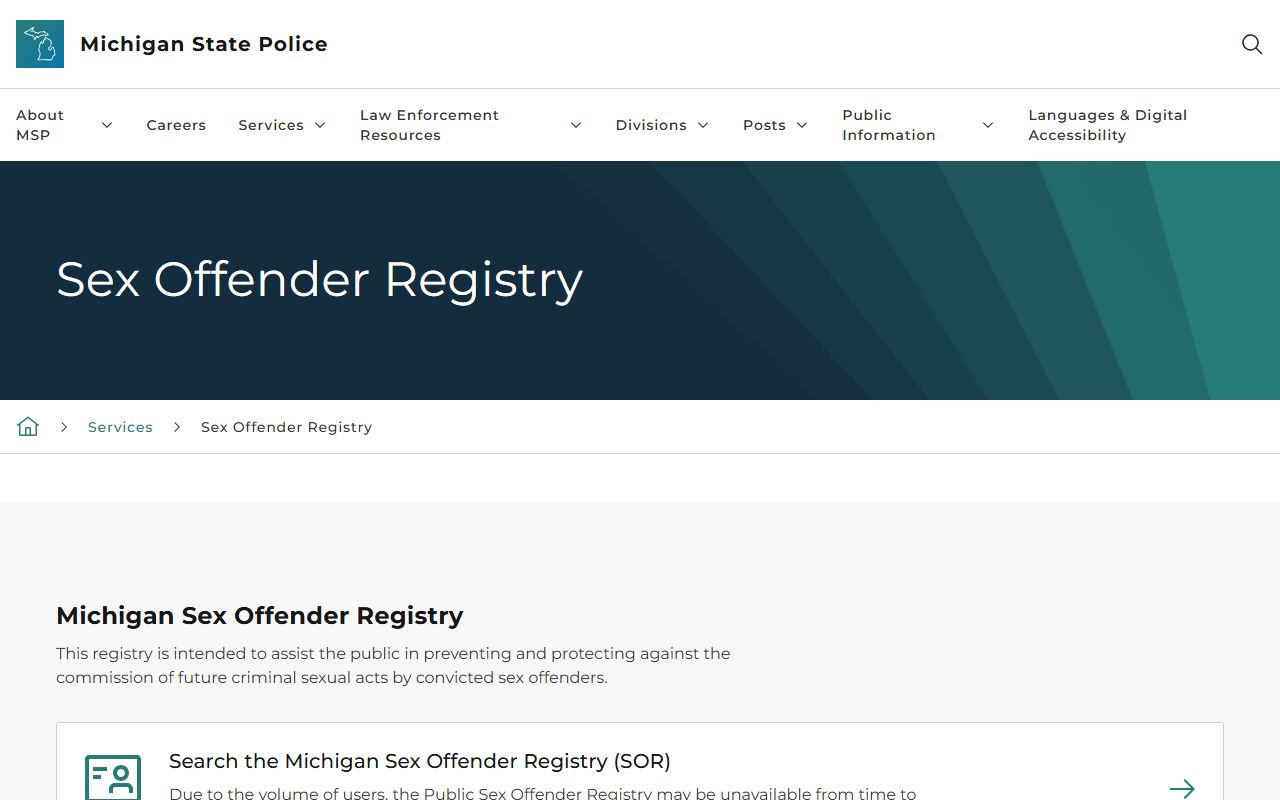
That registry search can supplement a Baraga County criminal court records search. It answers a narrower question though. It confirms registration and compliance status, not the plea, motion, or sentencing history the court docket shows.
Note: Juvenile records and sex offender registry data follow separate rules from adult criminal court records, so treat each system as a distinct source.
Prosecutor and Sheriff Contacts in Baraga County
The prosecutor and the sheriff are not substitutes for the court record itself. Both offices still help. Each answers different status questions along the way. The prosecuting attorney reviews police reports, researches cases, may meet with witnesses or victims, and presents the case against the accused. The sheriff's office handles patrol, civil process, court security, and operation of the county jail. It does not publish an online warrant list or inmate roster.
Baraga County Prosecuting Attorney
Joseph P. O'Leary, Prosecuting Attorney
906-524-6100 ext. 210
Fax: 906-524-5832
Baraga County Sheriff's Office
940 US Highway 41
L'Anse, MI 49946
906-524-6100 ext. 695
Fax: 906-524-5577. Open 24 hours a day, 7 days a week.
Neither office can release the full case file over the phone. The district or circuit clerk remains the correct contact for that. The clerk maintains the docket and its certified copies.
Accessing Baraga County Criminal Court Records
Baraga County does not route every criminal-record question through one online tool. Reading a record fully often means combining an online search with a phone call or an in-person visit. That is especially true for a felony that moved between courts. The wider set of Baraga County court records beyond criminal cases, including civil, traffic, and probate filings, is covered on the county's court records page.
- Online: MiCOURT Case Search for published district and circuit criminal cases.
- In person: Baraga County District Court for misdemeanors and felony preliminary stages.
- In person: Baraga County Circuit Court for felony cases after bindover.
- Phone: district court clerk at extension 202, circuit court clerk, or the prosecuting attorney at extension 210.
- Statewide: ICHAT for a criminal-history check, separate from the court docket.
- Request: a written FOIA request to the county for records not published online.
A FOIA request must be in writing. It can be submitted in person, by mail, by fax, or by email. The county typically responds within five business days, with a possible ten-business-day extension for more involved requests. Combining that channel with a direct clerk call remains the most reliable way to confirm what a Baraga County criminal court record actually contains.